

Verlag vatter&vatter AG
In the sustainability buzz of the book industry
As many people know, the fashion industry sometimes releases new collections every two weeks—and just as many are aware of the devastating consequences this fast fashion industry has on people and the environment.
But did you know that even in the book industry, new titles (“new releases”) are published at least every six months, and that bookstores primarily stock these new releases? Every few months, masses of so-called “publisher previews” flood into bookstores, touting countless new releases: here a new volume in a successful crime series (the best one yet!), there an unprecedented cookbook (by the much-lauded top chef), and over there an innovative guidebook (once again from the well-known XY publishing house). This is how thousands of small and large publishers try to market their publications. Sometimes more successfully, sometimes less. Over 60,000 new titles are still published each year in the German-speaking world alone. Who is supposed to read all of this? Let alone buy it?
Yet there is something timeless about a printed book. It has no expiration date. And yet, in the book trade, a title is often considered “backlist” after just one year. No matter how current or relevant its content is. While there are so-called long-sellers—books that are read over many years—smaller publishers in particular have to work hard to convince others to keep such titles in their catalog so they don’t disappear from the shelves after a short time.
What’s more, the most attractive window display spaces and book tables in bookstores are often occupied for months on end by major publishers who can afford to pay for them. This makes it difficult for exciting titles from smaller, independent publishers to gain visibility.
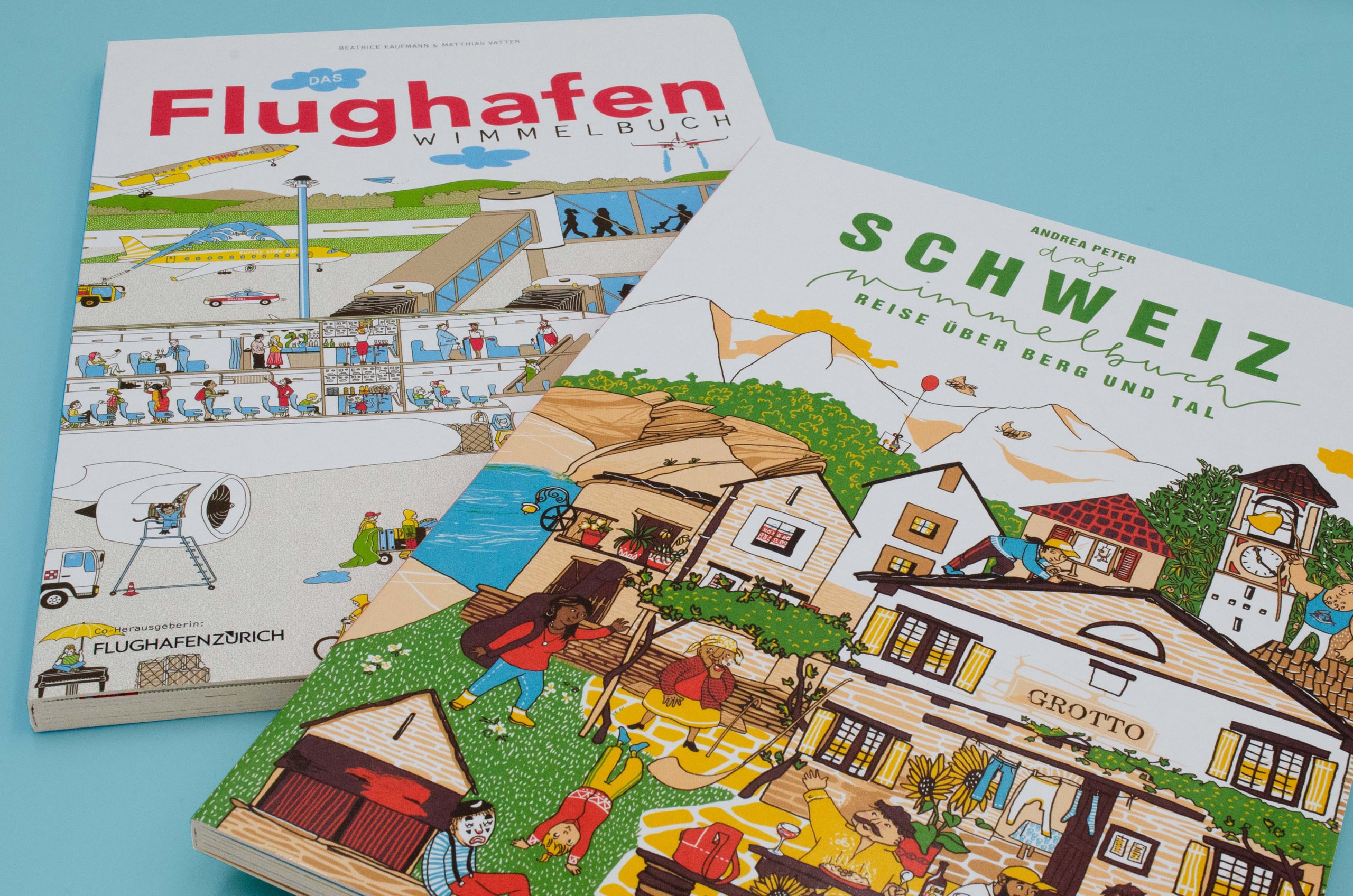
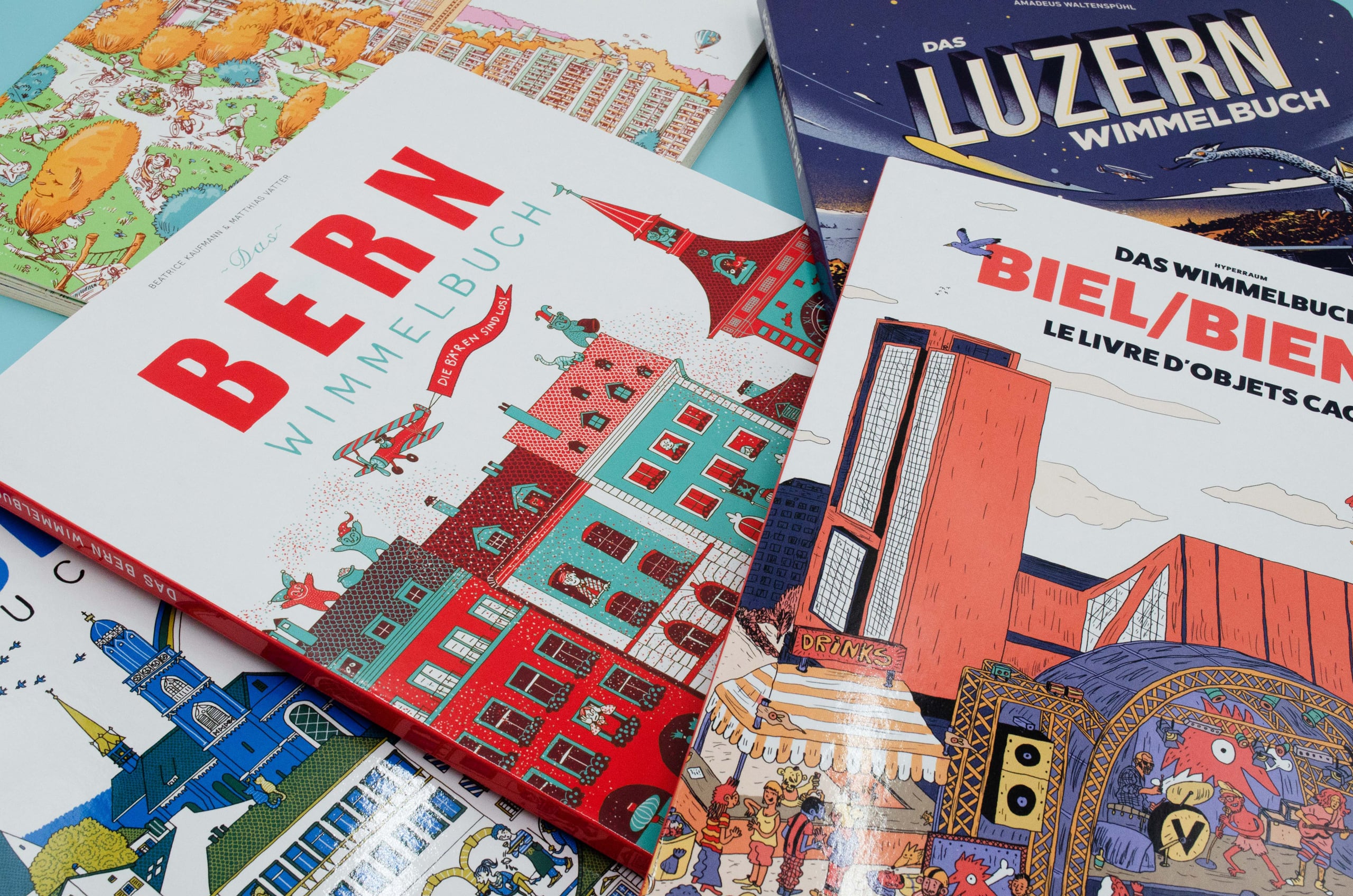
Producing high-quality board books—such as our “hidden object” books—is also anything but easy. Most of these books are now manufactured in China. There are no longer any printing companies in Switzerland capable of producing genuine board books: demand is too low to make it economically viable to operate the specialized machinery.
We are all the more delighted about our long-standing partnership with SDP Sachsendruck in Plauen (Germany). This historic company, whose history dates back to 1643, is one of the last European specialists in graphic cardboard printing and processing. Our hidden-object books have been produced there for over ten years.
In addition to environmental sustainability in production, we are also concerned with issues of social sustainability—such as fair wages and royalties—as well as economic sustainability in distribution. After all, good books should not only be created but also have a lasting impact.
What sets vatter&vatter apart:
• We do not produce biannual publishing previews or new releases. Our books are published when they are truly ready—not because the market is currently demanding the next new title.
• We deliberately limit the number of new releases and instead invest more time and energy in the long-term maintenance of our existing titles. Good books are allowed to grow and find new readers over the years.
• We tap into additional distribution channels and collaborate with project partners who use our books in larger quantities. This allows us to pay fair wages and offer above-average fees and benefits to our employees as well as authors and illustrators.
• We collaborate with partners in education, outreach, social services, and healthcare, as well as with companies in the private sector. This creates stable networks and long-term prospects for everyone involved.
• We produce as regionally as possible and keep production and distribution within Europe: Our board books are made in Germany, and we print our coloring and hidden-object books with printers in Bern, such as Jordi Druck.
Join Wimmel and support a way of making books that prioritizes quality, fairness, and sustainability.
Do you have any questions or ideas?
We welcome any messages: post@vatterundvatter.ch